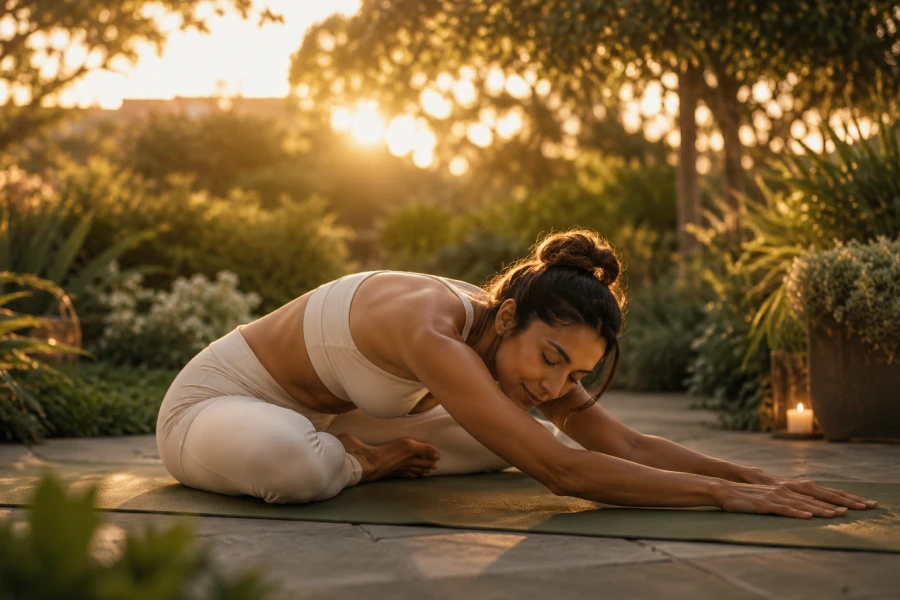
Evening movement should help the day leave your body. Beginner friendly yoga stretches create that gentle transition. They release tension without asking for big effort. They also give your mind a quieter place to land. You can move slowly. You can breathe deeply. You can soften the pace after a busy schedule. This makes flexibility feel comforting, not demanding. The goal is not a perfect pose. The goal is a calmer body before rest.
Evening energy is different from morning energy. Your body may feel tired. Your mind may feel crowded. A vigorous routine can feel like another task. Gentle stretching feels more inviting. It meets you where you are. It also helps release accumulated tension. A calm flexibility at home plan can make this easier. You stop wondering what to do next. The routine becomes a signal. Your body learns it can unwind.
Slow movement gives your attention somewhere simple to rest. You feel the mat. You notice your breath. You sense tightness without judging it. This helps the mind step away from replaying the day. Each pose becomes a small pause. The nervous system responds to that rhythm. You may feel calmer before the stretch even deepens. This is why gentle practice supports emotional balance. It does not solve every worry. It creates room around them.
Floor-based poses feel secure for many beginners. They reduce balance concerns. They also encourage slower breathing. Begin with a seated forward fold or reclined knees-to-chest. Add a supine twist if your back wants release. Use a pillow under your knees when needed. Comfort helps muscles soften. A simple gentle yoga sequence should feel supportive from the first minute. Props are not cheating. They are smart support.
Hip tension can affect how your whole body feels. Long sitting often makes the front hips tight. Stress can make the outer hips guarded. Gentle stretches help bring movement back gradually. A low lunge opens the hip flexors. Figure-four stretch targets the outer hip. Child’s pose can soothe the back and hips together. Move slowly between shapes. Avoid chasing deep sensation. Relief usually comes from patience, not force.
Breath keeps the routine honest. If you cannot breathe smoothly, reduce the intensity. This simple rule protects beginners from overdoing it. Inhale before entering a pose. Exhale as you soften. Stay for several calm breaths. Then leave the pose slowly. That rhythm builds trust. A beginner-focused home yoga practice becomes more effective when breath leads. Your body stops feeling rushed. The stretch becomes a conversation.
A nightly cue makes the habit easier. Roll out your mat before brushing your teeth. Put soft music on at the same time. Keep the routine short enough for tired evenings. Repeat familiar poses until they feel automatic. Consistency creates comfort. Comfort creates willingness. Willingness creates progress. You may notice better mobility first. Later, you may notice a calmer transition into rest.


Leave a comment