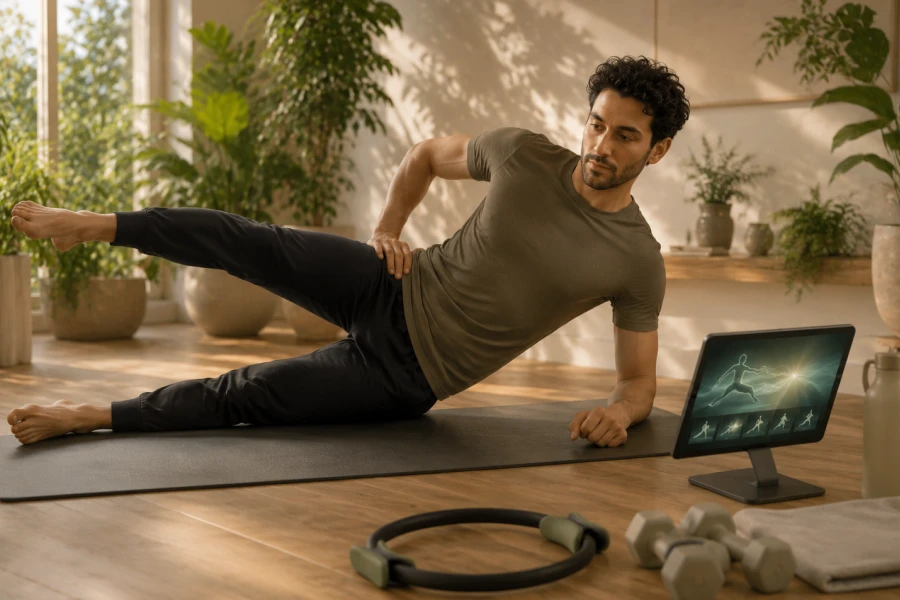
Starting Pilates can feel intimidating when every movement looks controlled and precise. Pilates for beginners works best when you understand the basics first. You do not need perfect coordination. You do not need advanced strength. You need patience, breath, and simple cues. The practice teaches your body how to move with more awareness. Small movements can feel surprisingly challenging. That challenge is part of the method. Progress comes from control, not speed. Once you accept that, the mat feels more welcoming.
Pilates is not about rushing through repetitions. It asks you to feel each movement clearly. Slower pacing reveals weak spots. It also improves control. Beginners often discover muscles they usually ignore. That discovery can feel humbling, but it is useful. A structured starter mat routine makes the process less confusing. You learn where to place attention. You also learn when to rest. That balance keeps practice sustainable.
Core strength in Pilates means more than visible abs. It involves breath, posture, and deep support. You learn to stabilize before moving. This protects the lower back. It also makes everyday movement feel more organized. Beginners benefit from simple cues. Think of lengthening through the spine. Think of drawing effort inward without gripping. A clear core strength basics approach can make those cues easier. Awareness becomes strength. Strength becomes confidence.
Breath is often the missing piece for new students. Many people hold their breath when concentrating. That creates unnecessary tension. Pilates uses breath to support control. It helps you time effort. It also keeps movements smoother. Start by exhaling during the hardest part. Then inhale as you prepare. This rhythm makes difficult movements feel more manageable. Breath turns effort into coordination.
The beginning stage should stay simple. Choose a few foundational movements. Practice them until they feel familiar. Avoid adding too many variations at once. More options can create confusion. A clear plan helps you notice improvement. It also reduces decision fatigue. You know what comes next. That predictability supports consistency. Consistency matters more than novelty.
New practitioners often chase a larger range than they can control. This makes movements look bigger but feel less stable. Another common mistake is gripping the neck. A third is flattening the body without breathing well. These habits are understandable. They come from trying hard. Instead, aim for smaller, cleaner movement. Use props when helpful. A practical home pilates plan can guide safe progression. Skill grows from precision. Precision grows from restraint.
Progress in Pilates can feel subtle at first. You may stand taller. You may breathe more smoothly. You may notice better control during daily tasks. These changes count. They show your body is learning. Avoid measuring success only by harder exercises. Measure it by steadiness and awareness. The mat becomes a place to practice attention. Over time, simple movements feel stronger. That quiet strength is the foundation of lasting Pilates practice.


Leave a comment