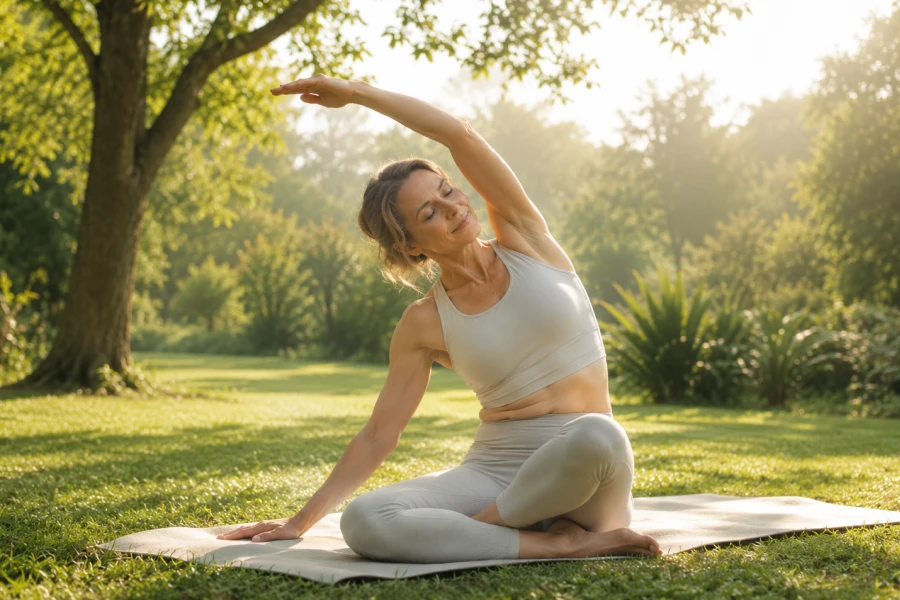
Morning stiffness can make your body feel older than your day requires. Gentle stretches with yoga offer a softer way to begin moving. You do not need advanced flexibility. You do not need a long session. You need approachable shapes that wake the body gradually. Slow breathing helps your muscles feel safer. Simple positions help your joints remember ease. The practice becomes less about performance and more about comfort. That shift matters for beginners. Movement feels possible when it starts gently.
Your body spends hours in limited positions overnight. Muscles tighten. Joints feel less responsive. The first movements of the day can feel awkward. Gentle yoga helps because it introduces movement without force. It invites warmth into the body. It also encourages slower breathing. A simple home flexibility routine can make mornings feel less abrupt. You begin with awareness. Then you add range. Finally, you step into the day with more ease.
Beginners often worry they are doing yoga wrong. That worry can make the body tense. A gentle approach reduces pressure. It treats comfort as useful information. If something feels sharp, you adjust. If breathing becomes strained, you soften. This builds trust between your mind and body. Confidence grows because the practice feels respectful. You are not chasing a dramatic pose. You are learning how movement can support you.
Breathing changes how stretching feels. A rushed breath can make muscles guard. A slower breath tells the body it can release. Try entering each pose with patience. Then exhale as you settle. Avoid bouncing or forcing range. Let the first version be modest. Your body often opens after a few breaths. A beginner-friendly easy yoga sequence uses this rhythm well. Breath becomes the guide. Movement follows instead of fighting.
Most beginners feel tightness in predictable places. The neck holds screen posture. The shoulders carry tension. The hips tighten from sitting. The lower back wants careful support. Gentle yoga addresses these areas without requiring extreme flexibility. A supported forward fold can calm the back body. A low lunge can wake the hips. A seated twist can refresh the spine. Small movements create noticeable relief. Consistency makes those results more reliable.
A morning flow works best when it feels repeatable. Choose three to five movements. Keep the order familiar. Start close to the floor. Move slowly toward standing. This progression helps the body transition gradually. You might begin with child’s pose, cat-cow, and a supported lunge. Then add a gentle fold. A practical beginner mobility practice keeps the routine clear. Clarity removes hesitation. Less hesitation means more consistency.
The best routine is the one you will actually repeat. Ten minutes done often beats one ambitious session done rarely. Keep your mat visible. Pair the practice with coffee, music, or morning light. Let the first minute be easy enough to start tired. Once you begin, your body usually wants more. Do not measure success by depth. Measure it by presence, steadiness, and comfort. Over time, the practice becomes familiar. Your mornings start feeling less stiff and more welcoming.



Leave a comment