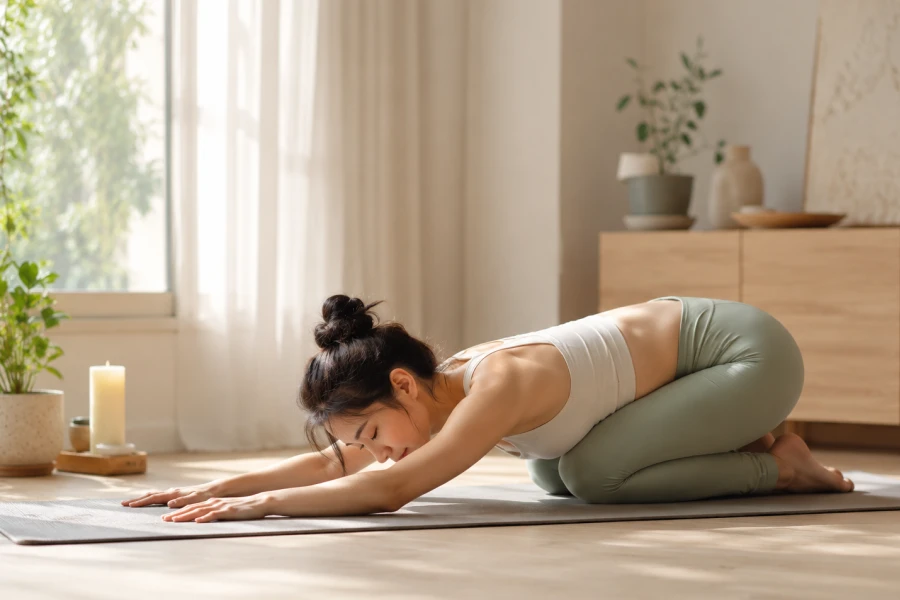
Home yoga becomes easier when the poses feel familiar and forgiving. Easy yoga poses for home practice give beginners a practical starting point. You can move without studio pressure. You can pause without feeling watched. You can repeat shapes until they feel natural. This makes consistency much more realistic. Your living room becomes enough. A quiet corner becomes enough. Even a small mat becomes enough. The practice starts where your real life already is.
Many beginners imagine yoga requires flexibility first. That belief keeps them waiting. In reality, simple poses build flexibility through repetition. Home practice lowers the emotional barrier. You can learn at your own pace. You can use props without embarrassment. You can choose shorter sessions when energy is low. A supportive gentle stretching plan makes those first steps clearer. Clarity reduces overthinking. Reduced pressure helps the habit grow.
Simple poses teach you how your body communicates. You notice where tension gathers. You notice which side feels tighter. You notice how breathing changes in discomfort. These observations are valuable. They help you adjust instead of pushing blindly. Body awareness makes movement safer and more satisfying. It also makes progress visible. You may not touch your toes immediately. You may simply feel less guarded. That is meaningful progress.
Your space does not need to look perfect. It needs to support movement. Clear enough room for your arms. Keep a towel or blanket nearby. Use a wall if balance feels uncertain. Dim lighting can help you relax. Natural light can make morning sessions inviting. A simple beginner yoga routine works even in small spaces. The goal is access. The easier the setup, the easier the practice becomes.
Sitting creates tightness that many people mistake for aging. The hips shorten. The spine rounds. The shoulders drift forward. Easy home poses can gently reverse that pattern. Cat-cow wakes the spine. Low lunges open the front body. Supine twists release the back. Supported bridge activates the hips. Each shape asks for attention, not perfection. Over time, your posture feels less locked. Daily movement becomes more comfortable.
Your routine should match your day. Some days need energy. Other days need calm. A morning session may include standing poses. An evening session may stay closer to the floor. Personalization keeps yoga from feeling like a chore. It also helps you listen more carefully. Try writing down which poses feel best. Then build around those patterns. A flexible home practice system makes that process easier. The routine becomes yours.
Lasting practice depends on kindness. You will miss days. You will feel stiff sometimes. You may forget the order. None of that means you failed. Return with the easiest pose. Let one pose become the doorway. Then add another if your body agrees. This approach protects motivation. It keeps yoga connected to care, not guilt. When practice feels doable, you naturally come back.


Leave a comment